The case for nuclear ocean-world missions is getting fresh attention in October coverage of a Frontiers review about exploring distant icy worlds. The paper was published September 21; Astrobiology highlighted it October 16. It examines mission concepts, not newly launched spacecraft. The search for extraterrestrial life has once again reached the unglamorous question of how to keep the equipment working somewhere extremely inconvenient.
The review considers three examples: a 44-kilowatt-electric propulsion concept combining Enceladus sample return with a Saturnian moon tour; a 43-kilowatt-thermal Europa Tunnelbot concept for reaching the ocean; and nuclear-thermal-propulsion orbiter concepts for Uranus and Neptune. These are different applications of nuclear technology, not three interchangeable reactor boxes waiting at an airport.
The authors describe distance, limited available sunlight and radiation as exploration challenges. Their argument is that nuclear systems could improve some combinations of power, propulsion, payload and operational flexibility. That is an engineering assessment of possibilities. It does not establish that the proposed missions have been approved, funded, built or shown to work as complete flight systems.
Analysis: the search for life needs more than an interesting destination. An instrument must arrive, operate and produce measurements that can be interpreted. Improving the means of exploration can therefore matter to astrobiology without being a discovery of biology. The distinction sounds obvious until a headline turns “could help investigate an ocean” into “scientists are one step from meeting its residents.” The ocean has not supplied a guest list.
The power units deserve care as well. Electrical output and thermal output describe different things, which is why the concepts label them separately. Repeating the figures without those labels would imply a direct comparison the numbers alone do not provide. A larger number does not automatically identify the more capable mission, any more than comparing a car’s horsepower with its fuel-tank capacity answers how well it corners.
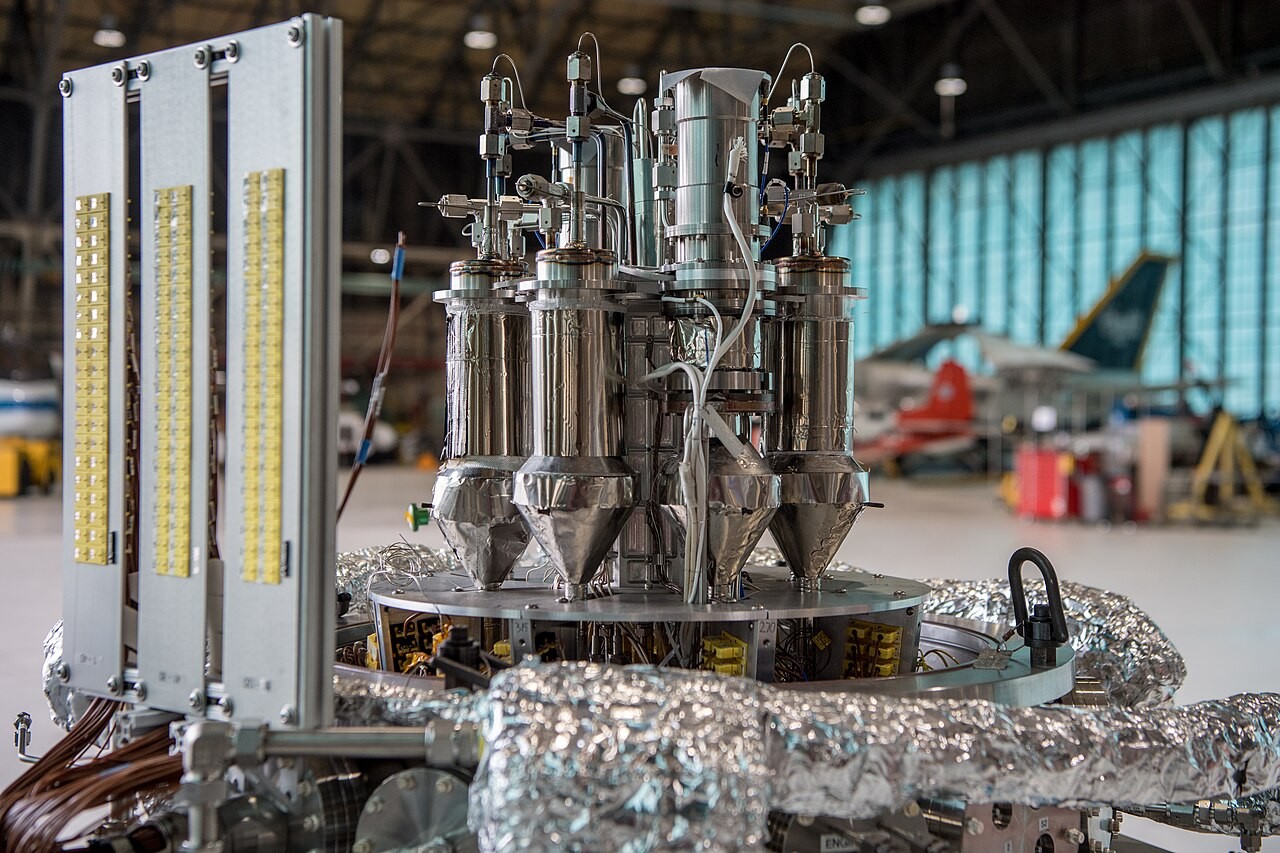
The article’s photograph shows real Kilopower prototype hardware on Earth. It is useful context for work on small space-reactor technology, but it is not a picture of the proposed vehicles and should not be presented as one. The review’s mission drawings are conceptual material; this story uses a ground-hardware photograph to meet the distinction between a real image and an imagined spacecraft.
The substantive development is a detailed review receiving new coverage, with specific architectures that readers can examine and question. No extraterrestrial organism, technological signal or confirmed habitable ocean sample is announced. Better mission design could expand what future investigations can attempt. That is a genuine search-for-life story, even when the most dramatic character in it is a power system doing its job.
Sources and photograph
Frontiers in Astronomy and Space Sciences, review published September 21. Astrobiology, October 16 coverage of the review.
Real NASA photograph of Kilopower prototype hardware from 2017; not a launched ocean-world spacecraft or the proposed Europa Tunnelbot. Photo: NASA Glenn; Public domain. Display copy resized. Original photograph and rights record. Image-use terms.

More from this Daily Junk Food section.
Facts first. Side-eye included.
DJF separates what is confirmed from what is claimed—and tells you why this particular mess is worth your time.

Dana Side-Eye
Receipts, Rumors & Internet NonsenseDana reads the fine print, checks the timeline, and keeps one eyebrow permanently raised. She covers viral claims, internet pile-ons, and suspiciously convenient explanations.
“Screenshots are forever. So is the side-eye.”