Developing court report and DJF analysis, November 3, 2026. This reports a November 2 preliminary ruling, not a final judgment on every claim. Further orders or appeals may change the position.
The Trump administration's voter-data campaign has hit another court barrier. Judge Tanya Chutkan granted preliminary relief against the Voter Data Transmission Policy on November 2, hours before Election Day. This is a separate case from the California ballot appeal and the Democratic committees' voter-letter lawsuit. Different case numbers matter, even when the political argument sounds familiar.
The ruling has an actual document
In the 30-page memorandum opinion, Chutkan found the moving plaintiffs likely to succeed on claims that the transmission policy lacked statutory authority and violated the Privacy Act. The court granted a preliminary injunction and a stay of agency action. Those are interim remedies while the litigation continues.
The opinion identifies the case as League of Women Voters and others v. Department of Homeland Security, number 26-cv-3602. EPIC and LULAC sought this preliminary relief; the League was not moving for it at that stage. The dispute concerns the government's collection and transmission of personal voter records, not a judicial declaration that every named voter committed an offense.
What the government says it is doing
Reuters' November 3 report says the ruling bars DOJ and DHS from distributing suspected-noncitizen voter lists to states and pressing officials to segregate or withhold the associated ballots. DOJ argued that its letters to California and Washington enforced the federal prohibition on noncitizen voting and were not a separate policy subject to judicial review. That position did not secure the result the administration wanted here.
The plaintiffs' own October 30 announcement explains what they requested before the ruling: a halt to transmitting lists of people the agencies characterized as likely noncitizens, alongside demands affecting ballot treatment. That announcement is advocacy by a party in the case, not independent proof that every allegation is established.
DJF analysis: a database flag is not a verdict
The accountability question is not whether a spreadsheet can look impressive in a press release. It is whether the government has lawful authority for what it does with the information, and whether the information is reliable enough to justify the consequences. Those questions deserve answers before an accusation acquires the practical force of a decision.
Equally, this ruling should not be inflated into a universal announcement that no eligibility question can ever be investigated. A specific policy and the requested relief are the subject here. An honest account can scrutinize federal power without pretending that one document disposes of every separate election case in the country.
Our California ballot chronology and Boasberg voter-letter report track other proceedings. Read the judge, the case number and the date before forwarding a triumphant graphic. The legal system already has enough paperwork without the internet supplying imaginary endings.
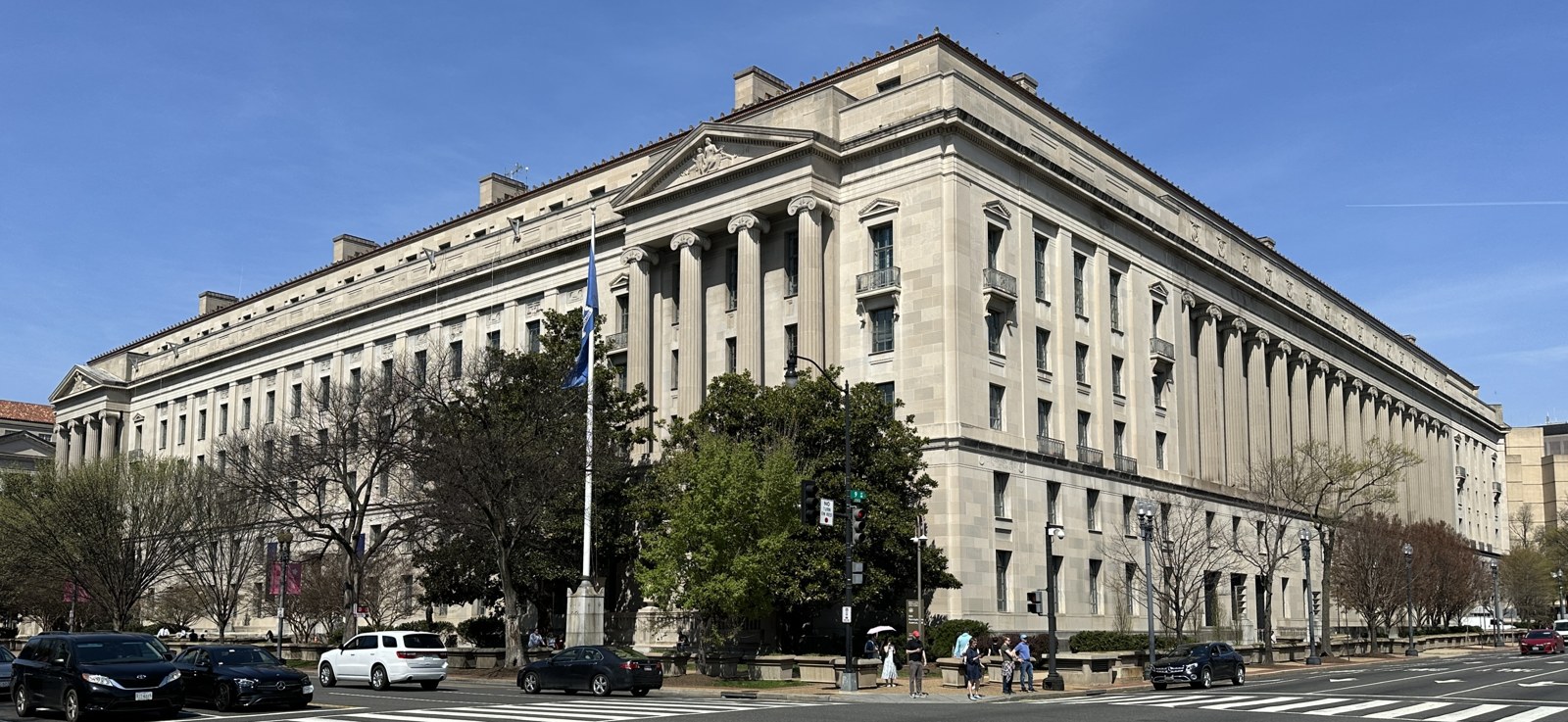
File photo: Justice Department headquarters, March 31, 2026, not the hearing or individual voters. APK / Wikimedia Commons, CC BY 4.0; resized.

Editorial note: This article draws on the linked sources and may include clearly labeled opinion or unconfirmed reports. We have not independently verified every source claim. Publication does not establish an unconfirmed claim as fact; developing details may change.
Facts first. Side-eye included.
DJF separates what is confirmed from what is claimed—and tells you why this particular mess is worth your time.