Science context review — October 30, 2026: This article examines an October 28 NASA mission update describing an October 16 planning session and an October 18 rover image. It is not a new October 30 drilling result, and the source does not announce a discovery of extraterrestrial life.
The Martian surface has produced another photograph capable of launching a thousand enthusiastic captions. The useful question is what the mission team actually proposes to test. At the target informally named Nazca, the answer concerns possible crystal forms—not a fossil announcement hiding between the pixels.
What NASA describes
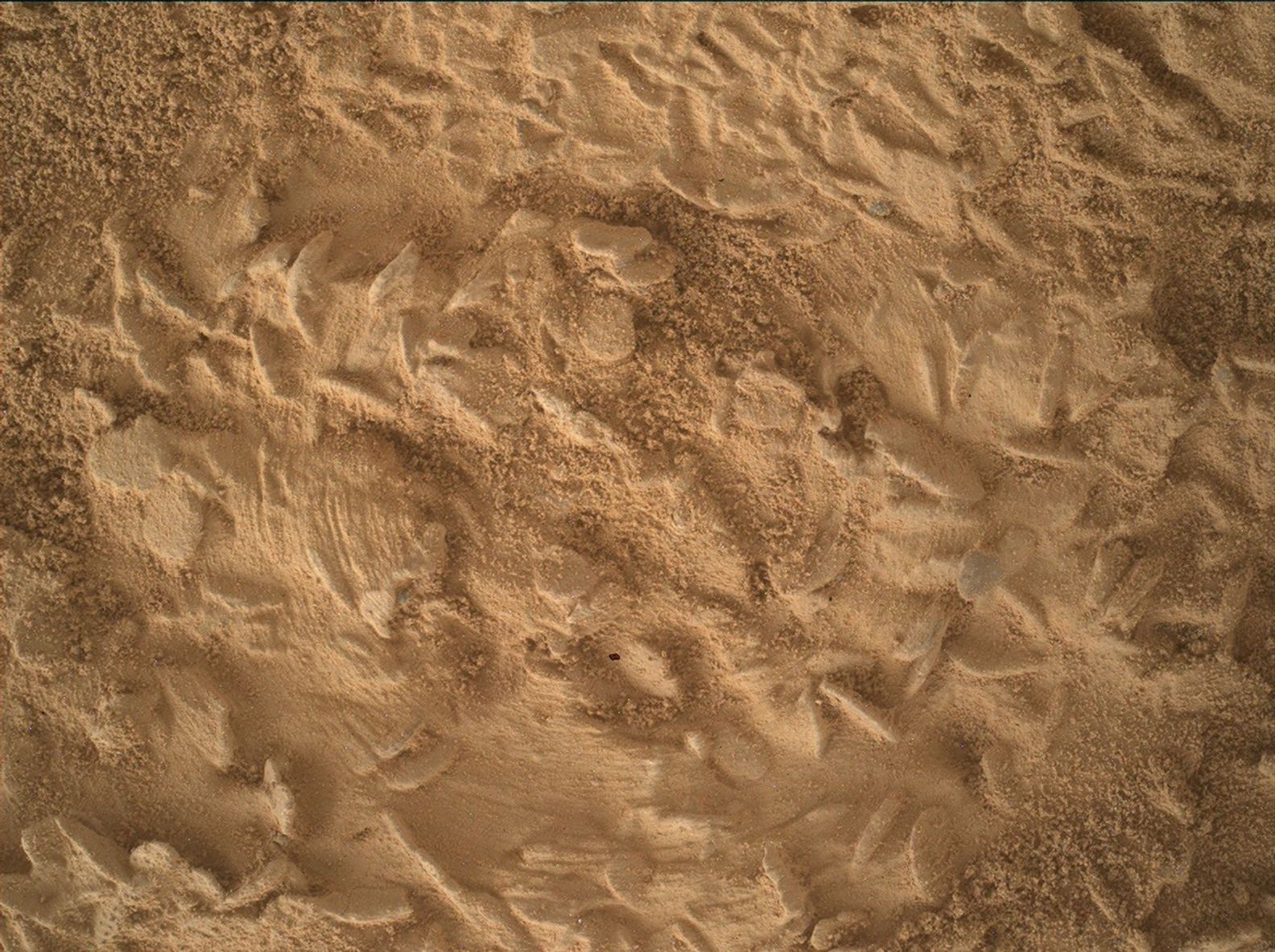
In the Curiosity mission update, planetary scientist Lucy Lim describes disc- and needle-like textures near the earlier Chiu Chiu block. One hypothesis is that crystals produced the shapes. Later mineral replacement could preserve a shape while changing the material, a process that produces a pseudomorph.
The plan includes detailed imaging to construct relief models and compositional work, including a deeper laser profile on nearby Toucan. These observations are intended to investigate the forms and their chemistry. The featured MAHLI photograph is a focus-composite made from real rover images, with brush scratches also visible.
That is a study plan and a geological interpretation under examination. It is not a completed biological identification.
Why a recognizable shape is only the beginning
A photograph can show that a feature exists without settling how it formed. The next question is which processes could produce it and which observations would help distinguish those explanations. Looking interesting is a reason to investigate, not an exemption from that work.
This distinction matters in extraterrestrial-life coverage because the leap from unusual to biological is much larger than a dramatic crop suggests. Even the word possible needs its noun attached: possible crystal forms does not mean possible organisms have been identified.
DJF analysis: let the instruments finish their sentences
There is nothing disappointing about a careful investigation of a strange rock. It is the actual business of exploration: selecting a target, asking what measurements would be informative and leaving room for an explanation to change.
The exciting part is the question becoming testable. Turning the image into a premature life claim would obscure that progress. A mission update deserves to be read for its verbs—planned, measured, interpreted—rather than treated as a launch pad for a conclusion it never states.
For another example of why an intriguing result and confirmed life are different claims, see our Viking Mars experiment review. The Science & Unexplained archive keeps the source dates and evidence status visible.
Image and mission source: NASA/JPL-Caltech/MSSS. Real focus-composite rover photography, not an illustration; journalistic use under JPL image-use policy and NASA media guidance.
Editorial note: This article draws on the linked sources and may include clearly labeled opinion or unconfirmed reports. We have not independently verified every source claim. Publication does not establish an unconfirmed claim as fact; developing details may change.
Facts first. Side-eye included.
DJF separates what is confirmed from what is claimed—and tells you why this particular mess is worth your time.