Reported context and publisher’s opinion · October 26, 2026
Palm Beach Pete is Peter Simel, the Florida man whose resemblance to Jeffrey Epstein became an internet spectacle. He has also publicly announced ambitions to become mayor of Palm Beach. Yes, the resemblance is the whole reason many people noticed the campaign chatter in the first place.
Publisher’s opinion: The likeness is striking, and watching that notoriety turn into a mayoral pitch is an obnoxious, surreal spectacle. “He looks like Epstein” is the visual reaction at issue here. It does not require inventing a connection between Simel and Epstein’s crimes.
The announcement was in May, not today
WFLA’s May 28 report records Simel’s announcement that he intended to run for Palm Beach mayor in 2028. It identifies the announcement as a social-media post and says election officials had not confirmed his paperwork at that time.
CBS12’s May 27 report likewise describes an announced bid. A public declaration and formal qualification are different stages. This article does not establish that Simel is currently a qualified candidate, or that the town is voting on his candidacy this November.
That date correction does not make the spectacle less bizarre. It gives it its actual setting: a viral personality floating a future political role, not a new candidate suddenly discovered on today’s ballot.
How a convertible became a public persona
CBS12’s March 20 coverage traces the attention to a video of Simel driving on Interstate 95. In his public response, he identifies himself as Palm Beach Pete and rejects the Epstein identification.
There is a grim absurdity to a recognizable resemblance becoming a brand, then a political calling card. Nobody selected by an internet lookalike contest has thereby demonstrated an ability to manage a town. If Simel pursues office, residents deserve the same answers they would expect from any candidate: priorities, budgets and what he would actually do.
The blonde-woman posts need their own explanation
One distinct strand of this story concerns images of “Palm Beach Lishgaine,” presented online as a girlfriend resembling Ghislaine Maxwell. Lead Stories’ September 2 investigation traced the circulated images to the @palmbeachlishgaine account and identified them as digitally generated.
The outlet reported that two images were identified by Google’s system as edited or generated with Google AI; it also described separate detector results. Its sourcing is more specific than merely saying a woman “looks fake.” The name Lishgaine rearranges the letters in Ghislaine.
That finding applies to those images. It should not be turned into an identification of every blonde woman who has ever appeared beside Simel. Nor does a reposted caption establish a real woman’s relationship to him or connect her to Maxwell.
Our take: this is a circus worth describing accurately
A man becomes famous for resembling Epstein, announces political ambitions, and then an AI-character subplot attaches itself to the spectacle. Florida has apparently decided the ordinary candidate questionnaire needs a bonus round.
The uncomfortable resemblance and the public performance are the story. They can be covered bluntly without turning unrelated people into criminal suspects. The campaign claim should be judged by actual election records, and the image saga by its original material.
Meanwhile, the real Epstein accountability questions concern records, witnesses, prosecutorial decisions and survivors—not whether another man has a familiar face. Follow our updated Epstein report coverage for that continuing story.
Photograph and credit
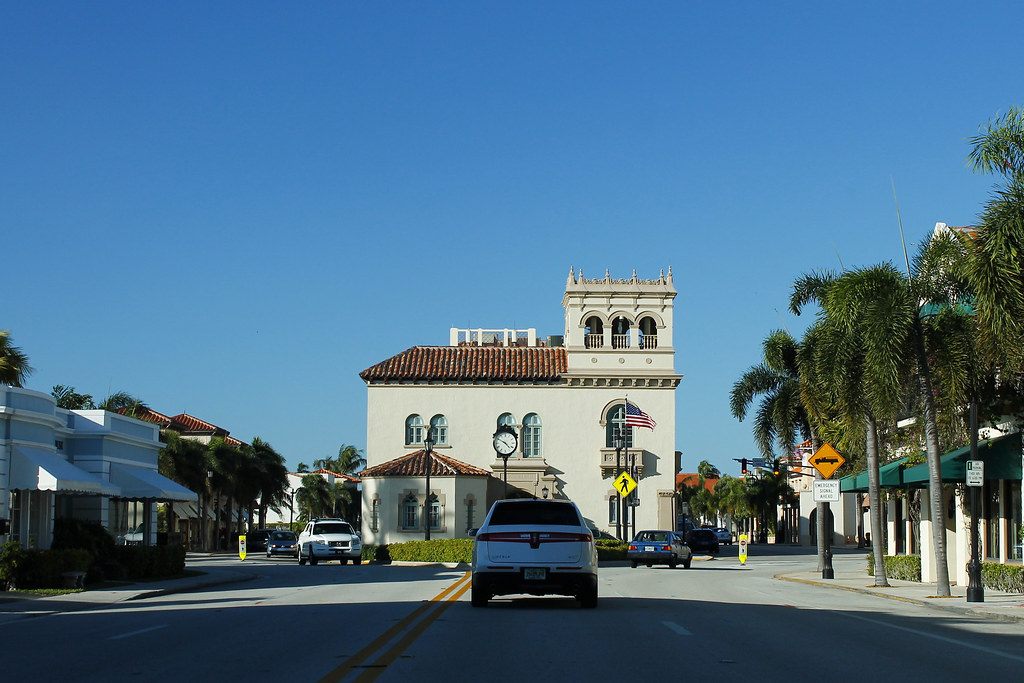
Representative file photograph: Palm Beach Town Hall, Florida, photographed October 30, 2012. It illustrates the municipality discussed here; it does not show Peter Simel, a companion or a campaign event. Photo: Josh Lintz/formulanone, CC BY-SA 2.0; display-size copy. Original photograph · Source record · CC BY-SA 2.0. Photograph remains available under that license.

Editorial note: This article draws on the linked sources and may include clearly labeled opinion or unconfirmed reports. We have not independently verified every source claim. Publication does not establish an unconfirmed claim as fact; developing details may change.
Facts first. Side-eye included.
DJF separates what is confirmed from what is claimed—and tells you why this particular mess is worth your time.