A new impact crater microbial experiment gives the search for life beyond Earth something more useful than another mysterious blurry dot. A Geobiology study first published October 17 reports that laboratory systems using impact rock developed diverse microbial communities within weeks. Astrobiology.com highlighted the work October 18. The organisms are terrestrial. The relevance to other worlds is the environment being tested.
The researchers used suevite, a melt-bearing impact breccia from Germany’s Ries structure, together with temperate soils in simulated hydrothermal microcosms. The study addresses how organisms establish themselves in warm, water-rich conditions associated with impact settings. It did not create life from nonliving material, and it did not bring back living samples from a Martian crater.
The reported communities occupied different habitats, including altered glass surfaces, the interior of impact rock, and sediment. Genetic analysis identified potential for processes associated with methane, iron, and sulfur cycling. Potential is the operative word: finding genes associated with a pathway is not the same as directly measuring every proposed process running at a particular rate.
Why astrobiologists care is the connection between an impact’s destruction and the environments that can follow it. Warm circulating water and reactive rock can make a crater more than a scar. The experiment supports investigating such settings as places where microbial communities and traces of their activity might develop. Translating that possibility to another planet still requires evidence from that planet.
Our read is that the value lies in making a broad habitability idea testable. Instead of stopping at the phrase promising environment, researchers can ask what colonizes which material and what evidence it leaves behind. That can sharpen future searches without pretending the laboratory has settled the history of life on Mars. The distinction is the science, not a footnote spoiling the fun.
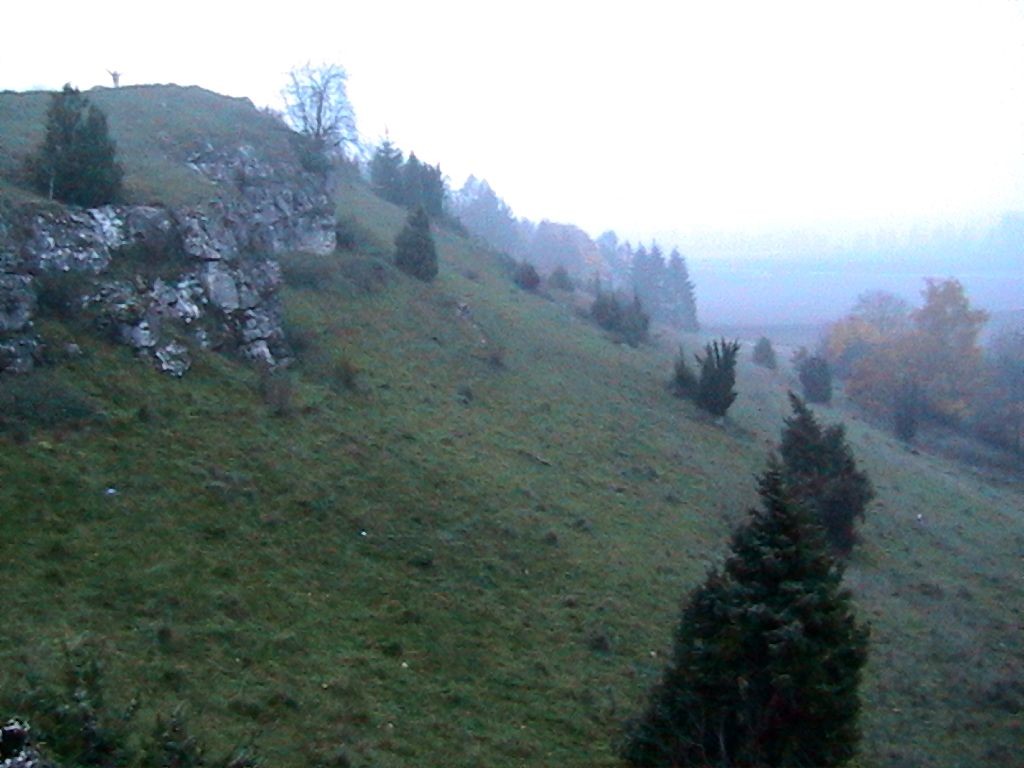
The featured photograph shows the real Ries crater rim on Earth, not an alien landscape or an image generated to look like a discovery. The result is a study of microbial establishment in an analogue environment. It strengthens the case for careful work in impact settings. It does not establish extraterrestrial organisms, UFO occupants, or anyone out there checking whether we have finally learned to read a methods section.
Sources and photograph
Geobiology, Hardy and colleagues, first published October 17. Astrobiology.com, October 18 research coverage.
Archival location photograph: the southern rim of the Ries impact structure near Mönchsdeggingen, Germany, October 29, 2005. Not Mars or the study’s laboratory apparatus. Photo: H. Raab (User:Vesta); CC BY-SA 3.0. Display copy resized. Original photograph and rights record. Image-use terms.

More from this Daily Junk Food section.
Facts first. Side-eye included.
DJF separates what is confirmed from what is claimed—and tells you why this particular mess is worth your time.

Dana Side-Eye
Receipts, Rumors & Internet NonsenseDana reads the fine print, checks the timeline, and keeps one eyebrow permanently raised. She covers viral claims, internet pile-ons, and suspiciously convenient explanations.
“Screenshots are forever. So is the side-eye.”