Tianwen-3 sampling sites are the subject of a new Astrobiology paper by Yi-Liang Li and Bo Wu, published October 14. Their recommendation: prioritize ancient closed lake basins when choosing where to collect Martian material. This is a proposed strategy for searching for evidence of life, not an announcement that anyone has found it. The alien welcome banner can remain in the cupboard.
The published abstract describes a planned 2028 launch and approximately 500 grams of samples returned in 2031. Those are mission plans as described by the authors, not completed milestones or guarantees. The proposed lander uses a two-meter drill and an arm for surface material. Unlike a rover, a stationary collection system makes the initial address especially important.
The authors favor basins retaining water-deposited sediments and minerals formed in place. They connect their recommendation to Curiosity and Perseverance findings and observations of brines and iron oxides associated with bacteria in a dry terrestrial analog basin. That Earth comparison motivates a hypothesis about promising Martian targets. It is not evidence that the same biology operates on Mars.
Why care about the address? Consider the logical problem rather than a cinematic one. A sample can only tell you about the material actually collected. A technically successful return from a poorly chosen setting might answer different questions from the ones motivating the mission. Selecting a place likely to preserve relevant traces is part of the investigation, not administrative paperwork before the exciting bit.
Our take: this is the useful, unglamorous side of the extraterrestrial-life beat. Before the grand conclusion comes a chain of narrower decisions about location, material and interpretation. A promising environment does not establish habitation. A feature resembling an Earth setting does not erase alternative explanations. The interesting question is whether a hypothesis produces a better test, not whether it produces a more exciting thumbnail.
This article draws on the published abstract rather than claiming access to the complete study or an official final landing-site decision. It covers a specific October research proposal, separate from DJF’s earlier Mars clay and Martian-moon reporting. Nothing here confirms aliens, living Martian microbes or a completed sample return. It does show researchers arguing about how to ask a better question before an extraordinarily difficult trip.
Sources and photograph
Li and Wu, Astrobiology, October 14, DOI 10.1177/15311074261499439. Published abstract, JoVE research index.
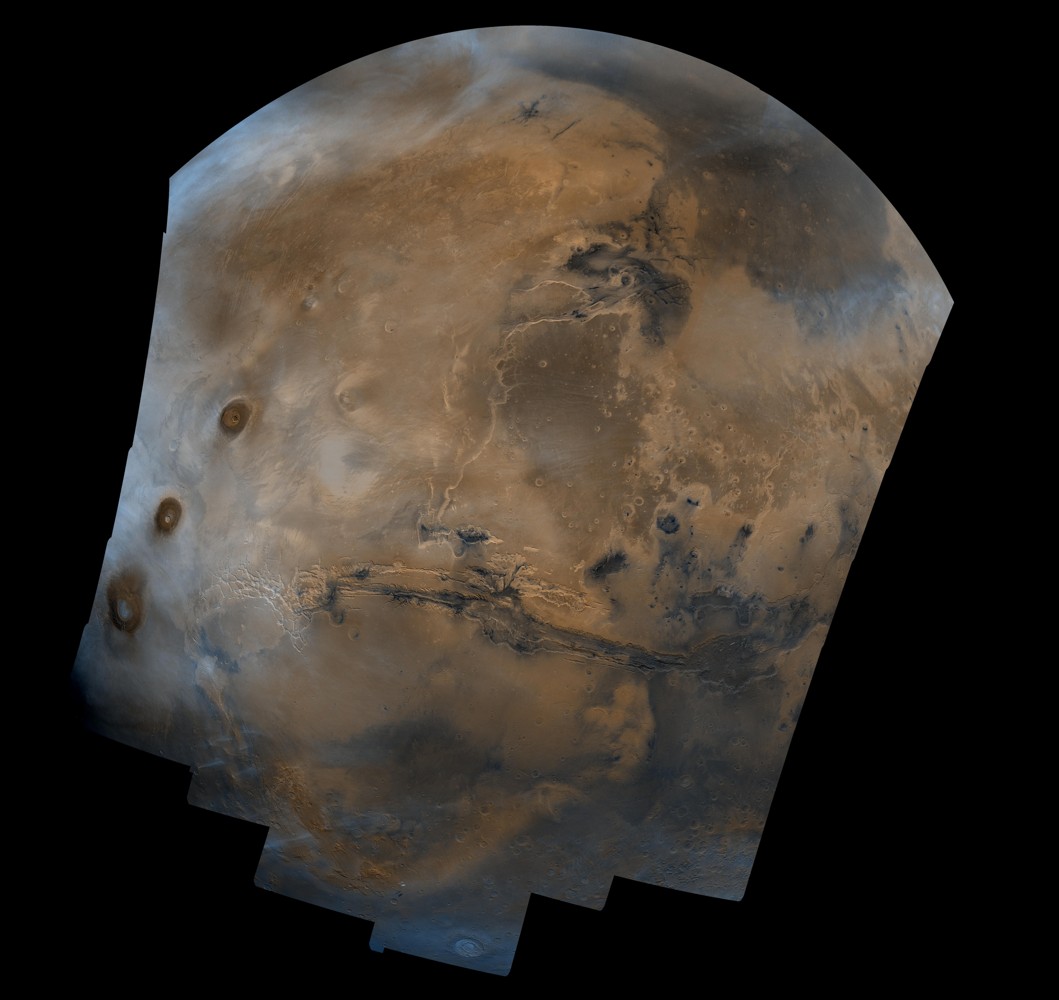
Archival spacecraft photograph of Mars. Context image, not a Tianwen-3 landing site, a new observation or evidence of life. Photo: NASA/JPL/USGS; JPL image-use policy. Display copy resized. Where applicable, the resized photograph retains the stated ShareAlike license. Original photograph and rights record. Image-use terms.
More from this Daily Junk Food section.
Facts first. Side-eye included.
DJF separates what is confirmed from what is claimed—and tells you why this particular mess is worth your time.

Dana Side-Eye
Receipts, Rumors & Internet NonsenseDana reads the fine print, checks the timeline, and keeps one eyebrow permanently raised. She covers viral claims, internet pile-ons, and suspiciously convenient explanations.
“Screenshots are forever. So is the side-eye.”