The WALTzER exoplanet atmosphere mission paper offers a fresh entry in the alien-worlds beat without smuggling aliens into the findings. Submitted October 15 and highlighted by Astrobiology October 19, it describes an ESA F3 mission candidate for studying transiting planets. Candidate is the operative word: this is a proposed observatory design, not a launch announcement, a finished survey or an inhabited-world discovery.
A. G. Sreejith and colleagues propose simultaneous measurements from near-ultraviolet through visible to near-infrared wavelengths. Their concept uses a 35-centimeter telescope and three aligned channels to examine more than 30 gas-rich exoplanets. The scientific aims include understanding atmospheric evolution and distinguishing planetary behavior from changes in the host star.
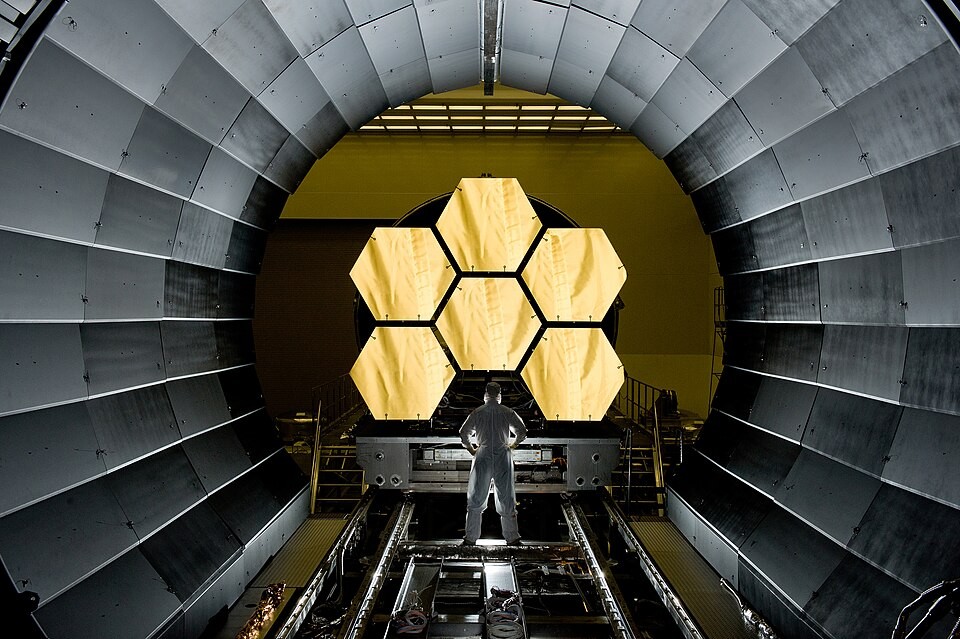
The paper also explores complementary use with JWST and Ariel through simulated observations. Those simulations are not measured spectra from a new flight instrument. Our real NASA photograph shows Webb mirror hardware in 2011, not WALTzER. There are no confirmed organisms, technosignatures or alien messages in this result. The subject is how to build better atmosphere measurements.
Our take: this is one of the useful, unglamorous stages in the search for other worlds. Before a scientist can interpret a signal, the instrument must make the right kind of observation. Before a headline can declare an atmosphere fascinating, somebody has to work out what else might influence the measurement. This is less convenient for the flying-saucer thumbnail industry, but substantially better for understanding planets.
Simultaneous coverage is an appealing idea because comparisons are only as useful as the conditions behind them. A reader can appreciate the measurement problem without treating every proposed solution as a guaranteed future success. The standard should be the same one we apply to a promised home renovation: drawings are valuable, but they are not the finished kitchen.
Atmospheric science is closely related to the wider question of which worlds might support life, yet a study of gas-rich planets does not become a direct life-detection claim simply by appearing in this section. The connection is the development of knowledge and observing methods. Jumping from instrument design to inhabited planets would skip most of the work that makes the question interesting.
The next meaningful milestones would be decisions about the mission and evidence from any eventual observations. For now, the new material is a detailed concept paper with a defined scope. It gives readers something more useful than a vague promise of imminent disclosure: a specific proposal for what to measure, how to measure it and why the comparison could matter.
Sources and photograph
Sreejith and colleagues, primary mission paper submitted October 15. Astrobiology, October 19 coverage of the paper.
Archival NASA photograph of James Webb mirror hardware, April 14, 2011. Context for complementary atmosphere observations, not WALTzER hardware or an exoplanet photograph. Photo: NASA/MSFC/David Higginbotham; Public domain (NASA). Display copy resized. Where applicable, the resized photograph retains the stated ShareAlike license. Original photograph and rights record. Image-use terms.

More from this Daily Junk Food section.
Facts first. Side-eye included.
DJF separates what is confirmed from what is claimed—and tells you why this particular mess is worth your time.

Dana Side-Eye
Receipts, Rumors & Internet NonsenseDana reads the fine print, checks the timeline, and keeps one eyebrow permanently raised. She covers viral claims, internet pile-ons, and suspiciously convenient explanations.
“Screenshots are forever. So is the side-eye.”