Archival evidence review — October 31, 2026. The detection dates to August 15, 1977. Its origin remains unresolved; this is not a new signal announcement.
The Wow! Signal has one of astronomy’s most memorable nicknames and one of the internet’s easiest category errors. Its famous letters and numbers were a compact record of signal intensity. They were not a decoded greeting. An intriguing observation does not become an alien message because its printout looks like a password.
The SETI Institute identifies the signal as a strong, narrow-band observation made by Ohio State University’s Big Ear radio observatory on August 15, 1977. It notes that follow-up efforts have not reproduced the event. That lack of repetition is central to the uncertainty, not a minor footnote after an extraterrestrial conclusion.
What the characters actually recorded
The University of Puerto Rico at Arecibo’s Planetary Habitability Laboratory explains that the printout encoded intensity values using single characters, including letters for values above nine. It says the original recording’s coarse time and frequency resolution does not allow an intelligent message to be extracted from those characters.
That explanation separates an observation from an interpretation. A rise and fall in received intensity can be scientifically interesting without carrying recoverable words. Treating the notation as a sentence skips the measurement question and heads straight for the movie trailer.
A proposed natural explanation is still a proposal
The PHL research group describes its Arecibo Wow! project as an investigation of unusual radio transients in archival data. It proposes that a rare enhancement of hydrogen emission could help explain the 1977 signal, while acknowledging that confirmation requires further events. This article does not present the proposal as a settled solution.
PHL’s confidence that the observation favored an astronomical origin also should not be translated into certainty about extraterrestrial technology. “Astronomical” includes natural phenomena. The SETI Institute’s overview continues to describe an unresolved source rather than an established intentional transmission.
DJF analysis: mystery is not a substitute for mechanism
There are several distinct questions here: what the receiver measured, whether the event can be observed again and which explanation accounts for it. A compelling nickname answers none of them. Neither does the fact that scientists have studied a natural possibility or that a signal resembles something a search was designed to notice.
Readers should look for reproducible observations, explicit predictions from competing explanations and clear statements about what the surviving data can support. The responsible status can remain “unresolved” without implying every explanation is equally well established—or promoting the most entertaining one by default.
Our Viking experiment archive review explores a related distinction between a response and its interpretation. The Science & Unexplained archive keeps those evidentiary steps visible. The Wow! Signal remains interesting without adding words nobody decoded.
Sources and photograph
SETI Institute, Wow! Signal overview. PHL at UPR Arecibo, measurement and research FAQ.
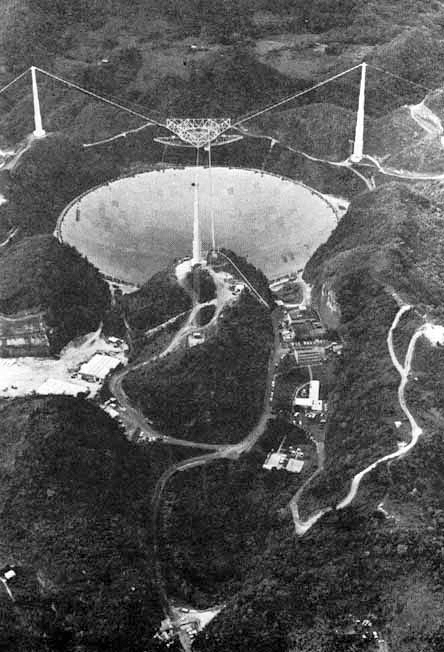
Historical context photograph: Arecibo Observatory, Puerto Rico; capture date unknown. This is not Ohio’s Big Ear telescope or the 1977 detection. NASA / public domain in the United States; archive contrast enhancement retained. Photograph source and rights record. Image-use terms.

Editorial note: This article draws on the linked sources and may include clearly labeled opinion or unconfirmed reports. We have not independently verified every source claim. Publication does not establish an unconfirmed claim as fact; developing details may change.
Facts first. Side-eye included.
DJF separates what is confirmed from what is claimed—and tells you why this particular mess is worth your time.